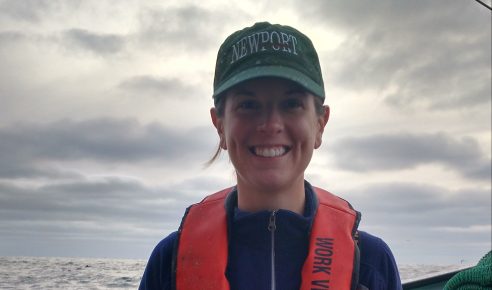
Title TBA
Alberto Rovellini, UW School of Aquatic and Fishery Sciences
Tuesday, February 3rd, 2025, 9:30AM
FISH 203
Webinar Link: https://attendee.gotowebinar.com/register/8831598901906187862
Abstract TBA
FISH 203
Webinar Link: https://attendee.gotowebinar.com/register/8831598901906187862
Virtual
Webinar Link: https://attendee.gotowebinar.com/register/8831598901906187862
FISH 203
Webinar Link: https://attendee.gotowebinar.com/register/8831598901906187862
FISH 113
Webinar Link: https://attendee.gotowebinar.com/register/4413110263879871319
FISH 203
Webinar Link: https://attendee.gotowebinar.com/register/5487004370240294486
FISH 203
Webinar Link: https://attendee.gotowebinar.com/register/6020211434618619488
FISH 113
Optimizing traditional and model-predicted fish ageing methods: a study of best practices
for quantifying ageing error and mitigating its various sources
Derek Chamberlin 1 and Jason Conner 1
1 National Marine Fisheries Service, Alaska Fisheries Science Center, 7600 Sand Point Way N.E.,
Building 4, Seattle, WA 98115
Age data are fundamental to population ecology and critical to age structured stock assessments.
The misspecification of ageing error can result in overly optimistic estimates of stock status
leading to inadvertent overfishing. The implementation of model-predicted age estimation
derived from Fourier transform near-infrared spectroscopy (FT-NIR) observations coupled with
multimodal convolution neural network (MMCNN) models introduces new sources of error in
the age estimation process. Given the impact of ageing error on stock assessment and new
sources of uncertainty in model predicted ages, the accurate quantification of ageing error is
critical to accurate stock assessment and sustainable fisheries management. We examined both
the quantification of ageing error and its effects on MMCNN predictions via two projects 1) a
simulation test of the optimal number of readers and proportion of a collection that is read by
those readers to reliably quantify ageing error and 2) a bootstrap resampling of age data based on
estimated ageing error to propagate ageing error through machine learning models. Initial results
suggest the proportion of collections that are tested by multiple readers can be reduced from the
current 20% but that test samples should be selected using a stratified random design.
Additionally, estimated ageing error resulted in a minimal decrease in FT-NIR model
performance (R 2 = 0.87 with ageing error and R 2 = 0.92 without), suggesting the FT-NIR
MMCNN is robust to noise in calibration age data. Finally, we explored application of the Punt
et al. 2008 ageing error matrix model to estimate total uncertainty in model predicted ages.
Webinar Link: https://attendee.gotowebinar.com/register/2275558504413507935

In a sweep, two PuntLab PhD students have been selected for the NMFS-Sea Grant Population Dynamics Fellowship this year. Students John Best and Maia Sosa Kapur each received three-year awards, which include tuition waiver and travel felowships. John’s research is entitled Improving spatial indices of abundance with fishery-dependent and -independent data, and he is mentored by Jim Thorson (another Puntlab graduate and previous PopDyn Fellow) at the AFSC. Maia is coadvised by Melissa Haltuch at the NWFSC (Puntlab graduate, and previous PopDyn Fellow) and Dana Hanselman at the AFSC, with a project entitled Effects of Spatial Mis-specification in Management Strategy Evaluation for Northeast Pacific Sablefish. Read the full announcement here.
Characterizing sources of uncertainty in future projections of the Eastern Bering Sea food web using a multi species-size spectrum model
In this talk I’ll give an overview of my ongoing efforts to (1) calibrate and validate a multi-species size spectrum model of the Eastern Bering Sea and (2) generate future projections of the EBS food web using 11 different downscaled global climate model (GCM) projections. The size spectrum model can represent different hypothesized pathways through which climate may influence system dynamics. Specifically, temperature can influence predator feeding rates and natural morality and the productivity of low trophic level groups can also be modified in accordance with down-scaled estimates for the EBS using each GCM. While there are several potential sources of structural and parameter uncertainty that may influence the projection envelope, I focus on how projection uncertainty is apportioned according to GCM, climate impact hypothesis, and fishing mortality scenario over time. In a preliminary simulation experiment, near-term projection uncertainty (2020 – 2050) of biomass for some species (e.g., forage fish, snow crab, pollock) was dominated by uncertainty related to fishing mortality scenario. However, uncertainty stemming from GCMs and the specific climate hypothesis was more important for long-term (2075-2100) projection uncertainty. The reverse pattern was observed for other species (e.g., Pacific cod, Pacific halibut). I’ll discuss how this information can be useful for prioritizing future research and and developing ensemble projections. This modeling work is part of the Alaska Climate Integrated Modeling Project (ACLIM).