SAFS in the News: Mislabeled seafood may be more sustainable, new study finds

SAFS grads, including Punt Lab member Qi Lee, are featured in UW Today. Qi Lee started the project during the SAFS Research Derby during its inaugural year prior to starting her degree.

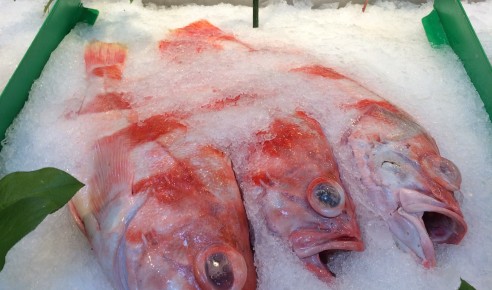
‘With seafood, what you see is not always what you get.

It’s no secret that mislabeling is rampant around the world. Recent studies estimate up to 30 percent of seafood served in restaurants and sold in supermarkets is actually something other than what is listed on the menu or label.

Why mislabeling happens is a little squishier. Fraud, human error or marketing ploys — combined with an often multicountry traverse from boat to restaurant — make it possible you are eating a different fish than what’s on the menu.

A University of Washington study is the first to broadly examine the ecological and financial impacts of seafood mislabeling. The paper, published online Nov. 2 in Conservation Letters, finds that in most cases, mislabeling actually leads people to eat more sustainably, because the substituted fish is often more plentiful and of a better conservation status than the fish on the label.’

Excerpt by Michelle Ma, UW Today
SAFS at 2016 World Fisheries Congress

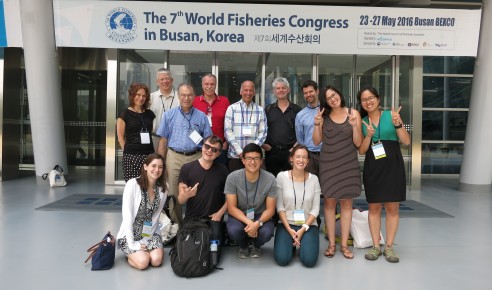
Fourteen UW students and faculty, together with countless more SAFS alumni attended the 7th World Fisheries Congress in Busan, South Korea, this May. The theme for this year was “Challenges to Sustainable Fisheries and Safe Seafoods”, a topic very relevant to our lab. There were 36 sessions at this congress, and approximately 1400 attendees. Two members of the current Punt lab were in attendance – Dr. Punt and MS student Lee Qi – as well as many former lab members, including Dr. Jim Thorson and Dr. Athol Whitten. Dr. Punt gave a talk titled “An Honest Appraisal on Stock Assessment”, and Lee Qi gave a presentation about her thesis work at SAFS.

Kristin wins Graduate Student Symposium Award

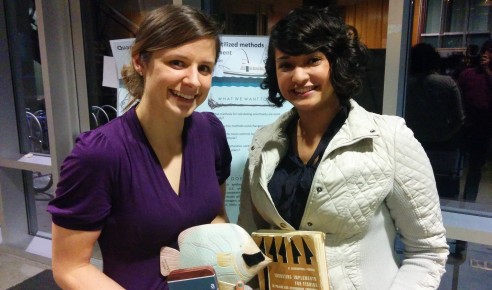
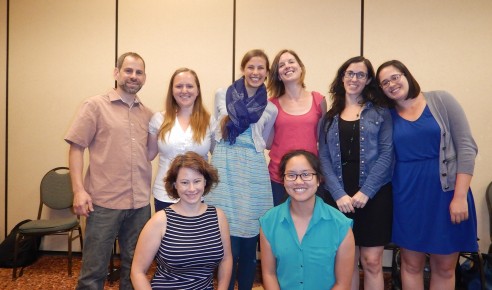
New student, Kristin Privitera-Johnson (on right), won the award for best poster at the 2015 School of Aquatic and Fishery Sciences Graduate Student Symposium. The Symposium offers an avenue for graduate students to showcase both future and past research to their fellow peers and members of the scientific community located in Seattle. Kristin’s poster outlined her research proposal for her work at UW. Congratulations Kristin.

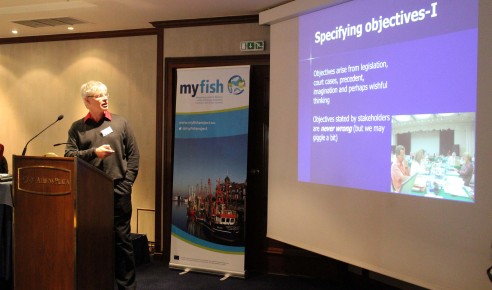
Andre Presents at the Final MyFish Conference

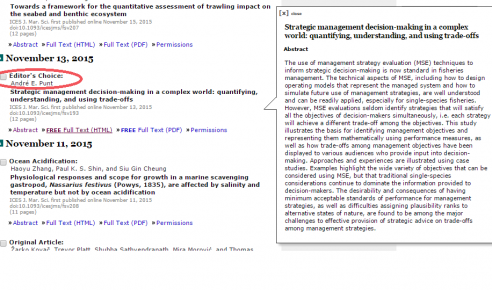
André Punt attended the final Symposium of the MyFish project. His keynote address Strategic Management Decision Making in a Complex World: Quantifying, Understanding and Using Trade-offs outlined how Management Strategy Evaluation can be used to compare alternative management options and how statistics and plots can be used to highlight trade-offs among the options. PuntLab alum Jim Thorson was one of the session leads as was Ocean Modelling Forum co-Director Phil Levin. The conference included five primary sessions: “Science and Management in a Societal Setting”, “Identifying Trade-offs and Conflicting Objectives”, “Incorporating Knowledge on Trade-Offs and Conflicting Objectives into Decision Making”, “Targets and Limits in a Variable World”, and “Practical Implementation of Targets and Limits: Institutional Frameworks which Deliver”. The papers presented to the conference will be published in the ICES Journal of Marine Science (André’s paper is already accepted).

CAPAM Data Weighting Workshop

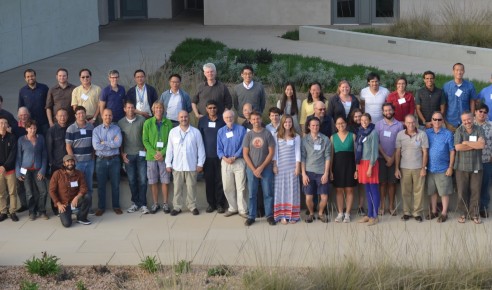
How should we weight fishery data in stock assessments? Four students from the Punt lab recently attended the latest Center for the Advancement of Population Assessment Methodology (CAPAM) workshop on data weighting in stock assessments in sunny La Jolla, California. In total, eight students and post doctoral researchers from the University of Washington spent five days learning about data weighting, likelihoods, and diagnostics for model misspecification in stock assessments. Sessions were attended on site by over 100 fishery researchers from around the world and several online participants. UW students were featured in one workshop and two presentations. Additionally, past Punt Lab member Dr. James Thorson gave a keynote address titled: “What is the likelihood that your model is wrong? Generalized tests and corrections for overdispersion during model fitting and exploration.”

Johnson earns NOAA/Sea Grant Population Dynamics Fellowship

Kelli Johnson, a current PhD student in the Punt lab, was recently awarded a three year NOAA/Sea Grant Population Dynamics Fellowship. The fellowship encourages applicants to pursue careers in either population and ecosystem dynamics and stock assessment or in marine resource economics. To facilitate learning about ecosystem dynamics, Kelli will work with Dr. Isaac Kaplan of the Northwest Fisheries Science Center on ecosystem indicators using output from Atlantis. Kelli falls in the footsteps of many previous Punt Lab students who also received Population Dynamics Fellowships.

Punt lab produces best available science

Thanks to efforts by the Northwest Fisheries Science Center (NWFSC) to train the next generation of stock assessment scientists, four members of the Punt lab had their work accepted as the best available science by the Pacific Fisheries Management Council. Caitlin Allen Axelrud (Punt), Felipe Hurtado-Ferro (Punt), Peter Kuriyama (Branch), Kelli Johnson (Punt), Qi Lee (Punt), Maite Pons (Hilborn), Merrill Rudd (Branch/Hilborn), Christine Stawitz (Essington), and John Trochta (Branch) spent much of the last academic year preparing stock assessment updates for petrale and sablefish. Their work was accepted as the best available science at the June 2015 management council meeting. Throughout the process they were mentored by Dr. Owen Hamel and Dr. Melissa Haltuch of the NWFSC.

Carey McGilliard wins CJFAS Editors’ Choice

Congratulations to Carey McGilliard, a former Punt lab postdoctoral researcher, and her most recent accomplishment of Canadian Journal of Aquatic and Fishery Sciences Editor’s Choice Award for February.

Accounting for marine reserves using spatial stock assessments

Carey R. McGilliard, André E. Punt, Richard D. Methot Jr., Ray Hilborn

When marine reserves are implemented, increases in fish abundance and percentage of older fish are expected in the reserve. Assessments of the status of marine fish stocks typically represent the stock throughout its range and do not account for the spatial pattern caused by marine reserves, which may lead to incorrect estimates of overall population status. Simulation modeling is used to analyze the ability of assessments to estimate population status after the implementation of a marine reserve. Assessment methods that explicitly accounted for a marine reserve and fish movement patterns yielded the most accurate and precise estimates of population status.